



A bubble mailer is the parcel itself, a bubble bag is inner protection that goes inside a box or a mailer, and bubble wrap is the manual fallback for anything the first two do not fit. Teams that treat the three as interchangeable usually pay for it in one of three places: labor, damage, or freight.
Here's what each one actually is, and the simple rule for which to reach for.
What each one actually is
- Bubble wrap — a roll of cushioning film. Infinitely flexible; you cut it to length and tape it around the product by hand. Great for odd shapes, slow and inconsistent for everything else.
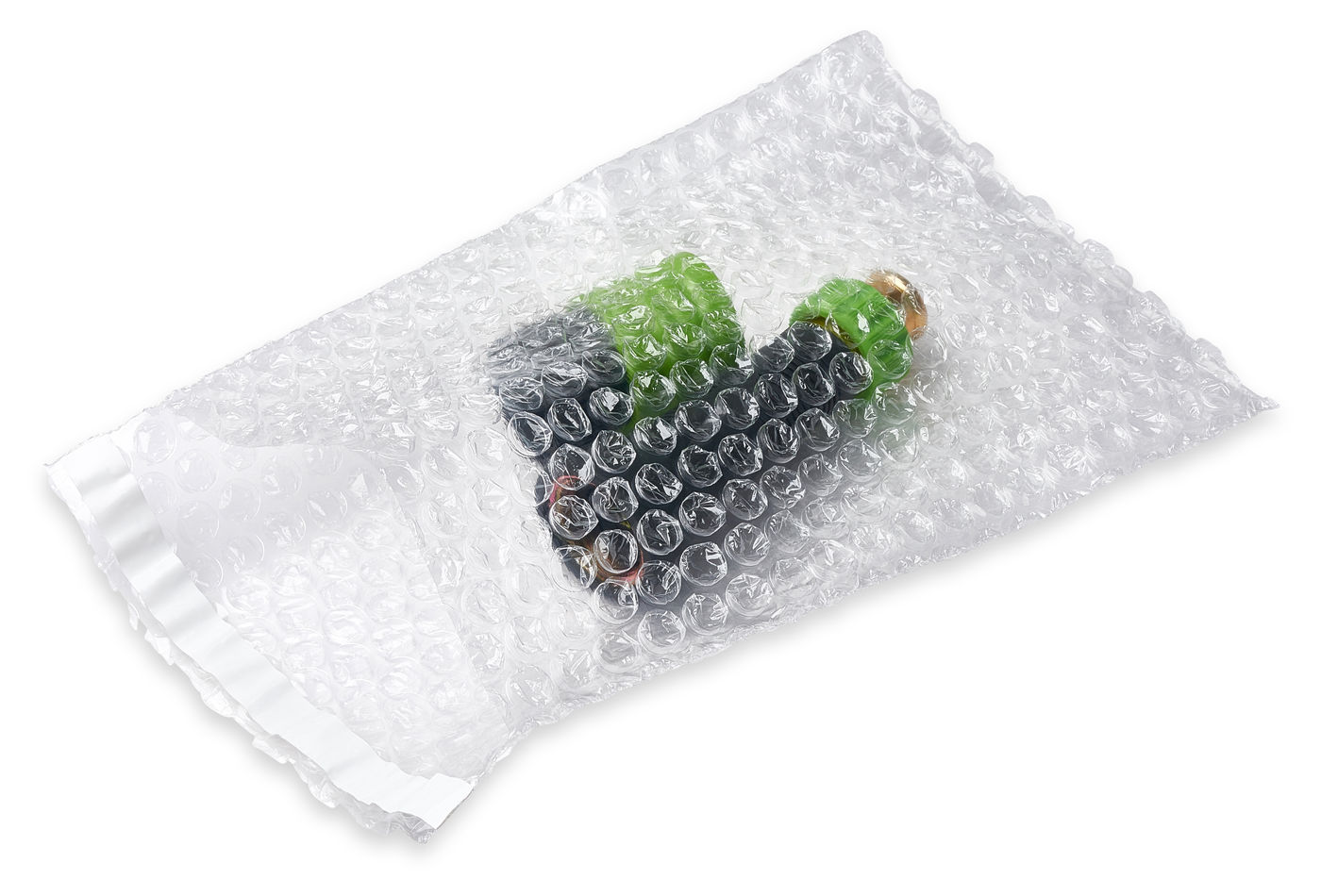
- Bubble bags — pre-made cushioned pouches. Drop the product in, peel the strip, press the lip. The speed of a bag with the protection of bubble wrap, in a consistent, sized format.
- Bubble mailers — padded shipping envelopes. A printable outer face (poly or kraft) bonded to a bubble lining, with an address-ready exterior and a self-seal flap. The shipping container itself, not an inner layer.
The job each one does
A bubble mailer is the parcel — it goes in the mail with a label on it. A bubble bag is inner protection — it wraps the product and then goes inside a box or a mailer. Bubble wrap is the manual fallback for anything the first two don't fit.
That's the whole distinction, and it's why “which is cheaper per unit” is the wrong question. They're not substitutes; they're different positions in the pack.
The hidden cost of bubble wrap at the pack station
Bubble wrap looks like the cheapest option on the unit price, and it's the most expensive in practice — because the cost isn't the film, it's the labor and the inconsistency. Cutting, wrapping, and taping by hand is seconds per parcel that add up across a shift, and every packer does it slightly differently, so protection varies and so does the parcel size.
A bubble bag collapses that to one motion: in, seal, done. The protection is identical bag to bag, the dimension is predictable (which keeps your dim-weight predictable), and a new hire is up to speed in minutes. For any product that ships in volume, moving from hand-wrapped bubble to a right-sized bubble bag is usually a labor win before it's anything else.
The rule: which one, when
- Shipping a single fragile item on its own → bubble mailer. It's the cushioning and the container in one.
- Protecting an item that goes inside a box (or kitting several into one carton) → bubble bags. Fast, consistent inner protection.
- Wrapping something large, oddly shaped, or one-off → bubble wrap. The manual tool for what the pre-made formats don't fit.
- A rigid, edged, or heavy item that needs immobilizing, not just cushioning → neither; that's a foam job.
Size all of them to the product
Whichever you use, the same rule applies: size it to the product. An oversized bubble mailer or a bubble bag with four inches of slack reads as a bigger parcel to the carrier and bills more dim weight, and over-wrapping with bubble wrap just buries the freight cost in labor too. The right format, sized right, protects the product and the shipping line item at the same time.
SOURCES
- Bubble mailer sizes explained: the #000–#7 chart and how to choose — USMEX Nearshore (sister plant, Tijuana)
Frequently asked questions
- Should I use bubble bags or bubble wrap?
- Use a bubble bag for any product that ships in volume, and bubble wrap only for large, oddly shaped, or one-off items. Bubble wrap looks cheapest on the unit price but costs more in practice, because cutting, wrapping, and taping by hand adds seconds per parcel and varies by packer, while a bubble bag is one motion with identical protection bag to bag and a predictable parcel dimension.
- What is the difference between a bubble bag and a bubble mailer?
- A bubble mailer is the shipping container itself, with a printable poly or kraft outer face bonded to a bubble lining, an address-ready exterior, and a self-seal flap; a bubble bag is a pre-made cushioned pouch that goes inside a box or a mailer. Ship a single fragile item on its own in a bubble mailer; protect an item that goes inside a box with a bubble bag.
- When is bubble packaging not enough to protect a product?
- When the item is rigid, edged, or heavy and needs immobilizing rather than cushioning, none of the three bubble formats is the right choice; that is a foam job. Bubble handles surface protection, not keeping a product from moving inside the box.