


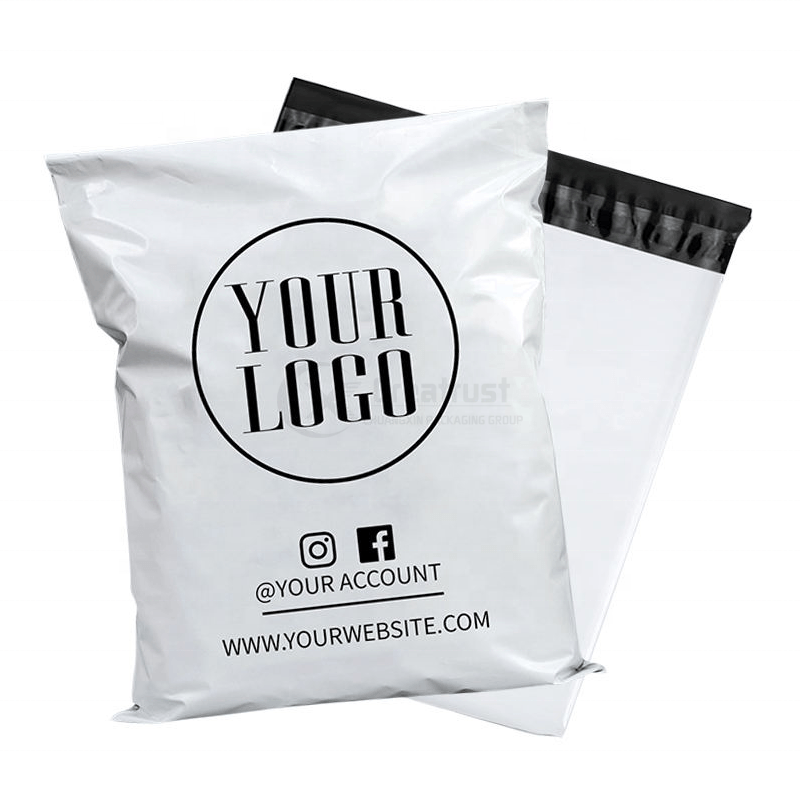
A custom printed poly mailer carries three numbers a stock mailer never has: a minimum order set by the print setup and the extrusion run, one-time plate, art, and proof costs that amortize across reorders, and a first-run lead time of typically a few weeks in which proof approval is the longest variable. None of them are arbitrary, and all three come down once you understand what drives them.
Here's where each number comes from, and the levers that move it.
What actually sets the minimum order
The MOQ isn't a sales tactic — it's the point below which a production run can't be done economically. Two things set it.
The first is the print setup: making plates and dialing in registration costs the same whether you print 2,000 bags or 200,000. Spread across 2,000, that setup dominates the unit price; spread across 50,000, it disappears into rounding. So the floor exists to keep the setup from swamping the bag.
The second, for a fully custom bag, is the extrusion run. A blown-film line has a practical minimum it can run before the gauge and blend stabilize — you can't make a few hundred yards of custom film and call it a lot. Printing on stock film carries a lower minimum than extruding custom film and then printing it, which is the first lever: if your volume is modest, custom print on a standard film gets you a branded bag at a lower floor than full custom extrusion.
The setup costs nobody mentions until the invoice
Custom mailers carry one-time costs that a stock mailer doesn't, and a good supplier itemizes them instead of burying them in the unit price:
- Print plates — one per color. A one-color logo is one plate; a four-color photographic print is four. This is why color count drives setup cost more than almost anything else.
- Art and proof. Prepping files for press and producing a physical or digital proof is labor, and it's where dimensions and color get locked before any film runs.
- Sizing, if your dimension is non-standard. A truly custom size may need a die or line setup that stock sizes don't.
- All of these are one-time. They live on the first order and amortize across every reorder of the same spec — which is exactly why the second run of a custom mailer is so much cheaper per unit than the first.
Where the lead time actually goes
A custom run isn't slow because it sits in a queue — it's a sequence of real steps, each of which takes real time:
- Art and proof approval — usually the longest variable, because it waits on you. Fast sign-off is the single biggest lead-time lever you control.
- Plate making — once art is approved.
- Extrusion — running the film, if the bag is custom-gauge or custom-size.
- Printing — your artwork onto the web.
- Conversion — cutting, sealing, flap, vent, and fold into finished bags.
- QC, pack, and freight — inspection, lot coding, and the short hop across the border on a nearshore run.
End to end, a first custom run is typically a few weeks; a reorder of the same spec is faster, because the plates and the proof already exist. The longest pole is almost always proof approval — the part that's on the buyer, not the plant.
How to bring the per-unit price down
- Order more at once. Setup is fixed; the more units it spreads across, the lower the per-bag cost. The jump from 50,000 to 250,000 usually drops the unit price more than any other single move.
- Use fewer print colors. Each color is a plate and a pass. A clean two-color design often reads as premium as a four-color one at a fraction of the setup.
- Hold a standard gauge and a near-standard size where you can. Custom is free to ask for; it's the exotic combinations that add cost.
- Reorder the same spec. The expensive part — setup — is already paid. Don't re-tool unless the design actually changed.
- Combine SKUs on one run. If three products share a size and gauge, printing them in one production window beats three separate setups.
Blank now, printed later
If you want custom dimensions but aren't ready to commit to print artwork, a blank custom-sized mailer skips the plate cost entirely — you get the right-sized, right-gauge bag now and add branded print on a later run once the design is locked. It's a common first step for brands that want the fit before the flourish.
What to send for an accurate quote
- Dimensions (or the product to size against) and the gauge, if you know it.
- Quantity — and your likely reorder cadence, which changes how the setup should be amortized.
- Print: number of colors and the artwork, or a note that you want blank for now.
- White, black anti-static, or clear; self-seal flap; single or double seal strip.
- Where it ships, so freight is in the number from the start.
The first custom run carries the setup; that's the nature of the thing. Reorders are where a custom mailer pays you back — same plates, same proof, a lower unit price, and a bag that's actually yours.
Frequently asked questions
- Why do custom printed poly mailers have a minimum order quantity?
- The minimum is the point below which a production run cannot be done economically, and it is set by the print setup and, for a fully custom bag, the extrusion run. Making plates and dialing in registration costs the same for 2,000 bags or 200,000, so spread across 2,000 the setup dominates the unit price while at 50,000 it disappears into rounding; a blown-film line also has a practical minimum before gauge and blend stabilize.
- How long does it take to get custom printed poly mailers?
- A first custom run is typically a few weeks end to end, and a reorder of the same spec is faster because the plates and the proof already exist. The longest variable is almost always art and proof approval, which waits on the buyer, so fast sign-off is the single biggest lead-time lever you control.
- How can I lower the per-unit price of custom poly mailers?
- Order more at once, use fewer print colors, hold a standard gauge and a near-standard size, reorder the same spec, and combine SKUs that share a size and gauge on one run. Each color is a plate and a pass, and the jump from 50,000 to 250,000 units usually drops the unit price more than any other single move.