


A poly mailer is made in four stages: polyethylene pellets (mostly LDPE and LLDPE) are blended, blown into film on an extrusion line, printed flexographically while the film is still a continuous web, and converted into cut, heat-sealed bags with the adhesive flap applied. Whether a supplier can build what you ask for depends entirely on which of those four stages it actually controls.
Here's the whole process, from a sack of pellets to a printed, sealed bag — and what each stage means for what you're allowed to spec.
Stage 1: the resin and the blend
A poly mailer starts as polyethylene pellets — mostly LDPE and LLDPE. The ratio between them is the recipe: LDPE gives the film body and a smooth, printable surface; LLDPE adds tear and puncture strength. Additives go in here too — anti-static so the finished bags don't cling on the bagger, slip agents so the film runs clean, and color or white masterbatch.
This is the stage that decides how the bag performs, and it's the one a reseller can't touch. If your supplier buys finished film, the blend was chosen by someone else for some other order. If they blend their own, “make it a little stiffer for our autobagger” is a conversation, not a no.
Stage 2: blown-film extrusion
The blended pellets are melted and forced through a circular die, then inflated into a tall bubble of film — the tower you see in a plant photo. Air cools the bubble as it rises; at the top it's collapsed into a flat web and wound onto master rolls.
The film's gauge (its thickness, in mils) is set and held here, and on a line with inline gauge monitoring it's measured continuously across the web so the thin spots that cause tears and failed warning print get caught in real time. Co-extrusion runs several layers at once, which is how you put strength where the bag needs it — a tough outer skin, a sealable inner layer — instead of spreading one resin evenly and hoping.
Stage 3: flexographic printing
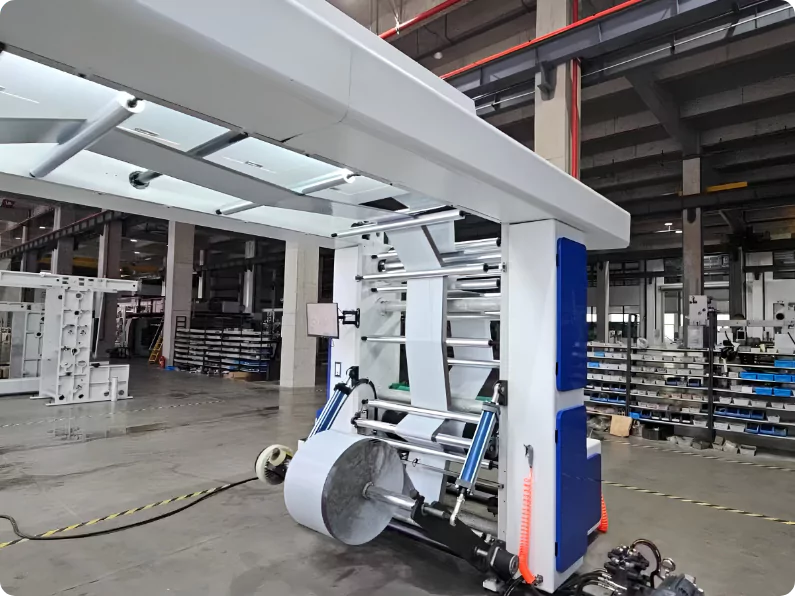
Branded mailers get printed before they're cut into bags, while the film is still a continuous web. Flexographic printing uses a raised plate per color — one plate for a one-color logo, four for a full-color design — inked and pressed onto the moving film, with registration keeping the colors aligned.
This is why color count drives both setup cost and price: each color is another plate and another print station. It's also why a clean two-color design is often the smart brief — it reads as premium without the four-plate setup.
Stage 4: conversion
Conversion is where a roll of printed film becomes a stack of bags. The web is cut to size, the bottom is heat-sealed, the adhesive flap and its peel liner are applied, vent holes are punched if the bag needs them, and the format is set — a J-fold mailer, a side-weld pouch, a single or double seal strip for returns.
Everything a buyer thinks of as “the bag” — its dimension, its closure, its flap — happens here. A supplier who converts their own film can cut the in-between size your product actually wants; one who buys pre-made bags is limited to the sizes someone else already converted.
The fifth thing: quality and lot trace
Running alongside all four stages is the part that doesn't show up in the bag but shows up the day something goes wrong: gauge checks, seal tests, and a lot code that ties the finished bag back through conversion, extrusion, and the specific resin lot it ran on. That chain is what lets a brand answer a regulator, an underwriter, or a marketplace when an incident happens — and it only exists if one operation controlled the whole run.
Why controlling all four matters to you
When one plant runs resin to finished bag under a single roof, the buyer gets things a reseller structurally can't offer: a blend tuned to your line, a gauge dialed to your product, a size that isn't on anyone's shelf, no silent substitution between orders, and a traceable chain back to the pellet. One team is accountable for the whole bag instead of four hands each responsible for a slice.
That's the real answer to “how is a poly mailer made.” It's made in four stages — and the supplier worth specifying to is the one that runs all four, because that's the one that can actually build what you ask for.
Frequently asked questions
- What are poly mailers made of?
- Poly mailers are made from polyethylene pellets, mostly LDPE and LLDPE. LDPE gives the film body and a smooth, printable surface, LLDPE adds tear and puncture strength, and additives such as anti-static, slip agents, and color or white masterbatch go into the blend before extrusion.
- How are poly mailers printed?
- Branded poly mailers are printed flexographically on the continuous film web before it is cut into bags, using one raised plate per color. Each color adds a plate and a print station, which is why color count drives setup cost and price, and why a clean two-color design is often the smart brief.
- Why does it matter whether a poly mailer supplier makes its own film?
- A supplier that runs resin to finished bag under one roof can tune the blend to your line, hold a gauge dialed to your product, cut a size that is not on anyone's shelf, avoid silent substitution between orders, and trace a lot back to the resin pellet. A reseller that buys finished film or pre-made bags is limited to the blends and sizes someone else already chose.