


The real 2026 cost of poly packaging is the landed cost in your warehouse, not the unit price on the quote: unit price plus tariff, freight, brokerage, the inventory carrying cost over the lead time, and the risk you carry. On that math a USMCA-compliant Mexican mailer, which crosses the border duty-free in days, frequently matches or beats a Chinese quote that still looks lower per unit.
Unit price is the cost of the bag at the supplier's dock. What you actually pay is the landed cost in your warehouse, plus the cost of the time it took to get there, plus the cost of the cash you tied up waiting. Run that math and the 2026 comparison looks very different from the quote.
Start with landed cost, not unit price
Landed cost is the unit price plus tariffs, ocean freight, brokerage, and duties — everything it takes to turn a bag at a Chinese dock into a bag on your shelf. In 2026 the tariff line alone reshapes the comparison: U.S. duties on Chinese plastic bags, food packaging, and stretch film now run steep enough that a Chinese mailer landing at $0.04 in 2023 lands closer to $0.09–$0.10 today, before freight.
A USMCA-compliant Mexican mailer crosses the border duty-free. So the gap that looked like two cents on the unit quote is frequently gone — or reversed — by the time both bags are landed. The catch is the phrase “USMCA-compliant”: it only holds if your supplier can prove the origin on paper, which is the first question to ask.
Then add the lead time — and what it costs
Ocean freight from China is five to eight weeks door to door on a good day, plus port congestion, customs holds, and the occasional blank sailing. A Tijuana run crosses the border in days.
Lead time isn't just patience; it's cash. A long lead forces you to hold more safety stock so you don't run out while the next container is on the water. That stock is working capital sitting in a warehouse instead of in your business, and it carries a cost — financing, storage, and the risk that the SKU changes or the season ends before you've sold through it. The longer the pipeline, the more cash is frozen inside it.
The MOQ and the container commitment
China's economics push you toward the full container. To make the freight and the unit price work, you order big — often six to twelve months of a single spec at once. That's fine until the spec changes: a rebrand, a size revision, a discontinued SKU, a compliance update. Then the unconsumed half-container is dead inventory you paid for up front and can't easily return across an ocean.
Nearshore inverts that. Shorter runs, ordered more often, mean you can change the spec between orders instead of being locked to whatever you committed to two quarters ago. For a brand whose packaging evolves — and most do — that flexibility is worth real money the unit quote never shows.
The costs that live on neither quote
Some of the biggest differences never appear on either supplier's number. A timezone that overlaps your workday and a quote thread in your language turn a three-day email loop into a same-afternoon answer. Recourse on a bad lot is a redelivered run next week, not a claim against a container that already shipped. Control over your own spec means no silent resin substitution to hit a price — the kind of change that doesn't surface until a lot fails on your bagger.
None of that is on the quote. All of it is on your P&L, in the line items labeled “returns,” “expedites,” and “write-offs.”
The total-cost comparison, in one line
Stop comparing unit price. Compare this, per SKU: unit price + tariff + freight + brokerage + (inventory carrying cost × lead time) + the cost of the risk you're carrying. Put both suppliers through that and the decision stops being about who's cheapest on the quote and starts being about who's cheapest in your warehouse, over a year, including the bad week.
For a lot of poly SKUs in 2026, that math doesn't just narrow the gap — it crosses it. Nearshore stopped being the patriotic choice and became the cheaper one once everything got counted.
Questions to settle it for your SKUs
- What's the landed cost — not the unit price — of each option, with tariff and freight included?
- What lead time does each carry, and how much safety stock does that force you to hold?
- What's your exposure if the spec changes mid-container — how much dead inventory, and can it be returned?
- Is the Mexican option genuinely USMCA-compliant, with origin documentation you can put in a file?
- Does the supplier run its own extrusion, or is it bagging tariffed third-country film under a Mexican address?
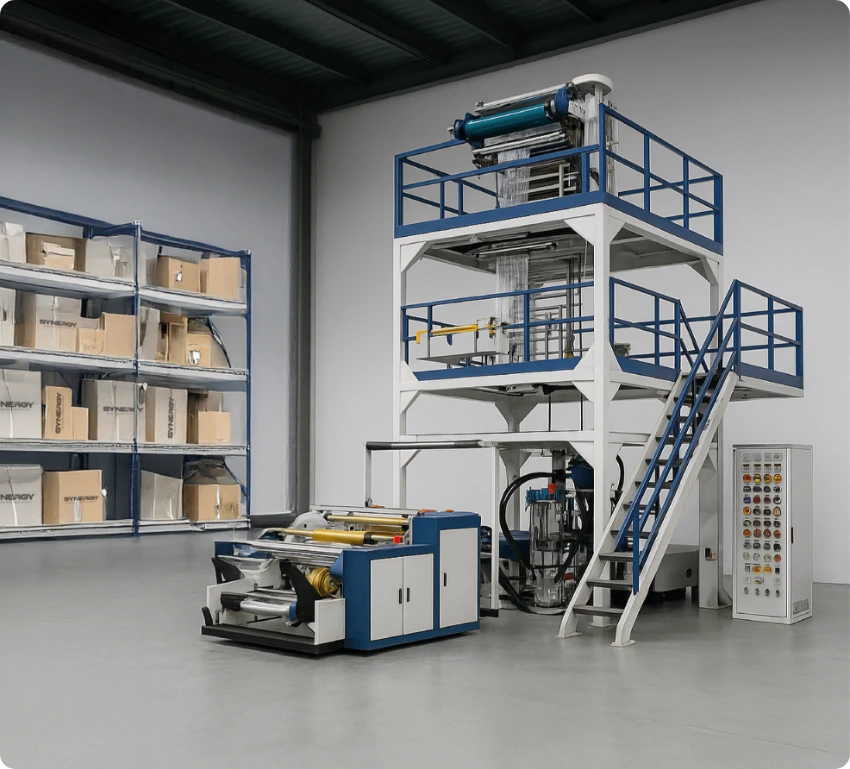
The last question is the quiet one. A Mexican address on the bill of lading isn't the same as Mexican-made film. The suppliers that win the 2026 math are the ones extruding their own film off regional resin — same border, very different landed cost.
SOURCES
Frequently asked questions
- Is it cheaper to buy poly mailers from Mexico or China in 2026?
- On landed cost, a USMCA-compliant Mexican poly mailer is frequently as cheap as or cheaper than a Chinese one in 2026, even when the Chinese unit price looks lower on the quote. U.S. duties on Chinese plastic bags now run steep enough that a Chinese mailer landing at $0.04 in 2023 lands closer to $0.09 to $0.10 today, before freight, while a USMCA-compliant Mexican mailer crosses the border duty-free.
- How long is the lead time for poly packaging from China compared to Mexico?
- Ocean freight from China is five to eight weeks door to door on a good day, plus port congestion, customs holds, and the occasional blank sailing; a Tijuana run crosses the border in days. The longer lead forces you to hold more safety stock, which is working capital frozen in a warehouse instead of in your business.
- How do I know if a Mexican poly packaging supplier is really USMCA-compliant?
- Ask for origin documentation you can put in a file, and ask whether the supplier runs its own extrusion or is bagging tariffed third-country film under a Mexican address. The duty-free treatment only holds if the supplier can prove origin on paper, and a Mexican address on the bill of lading is not the same as Mexican-made film.