



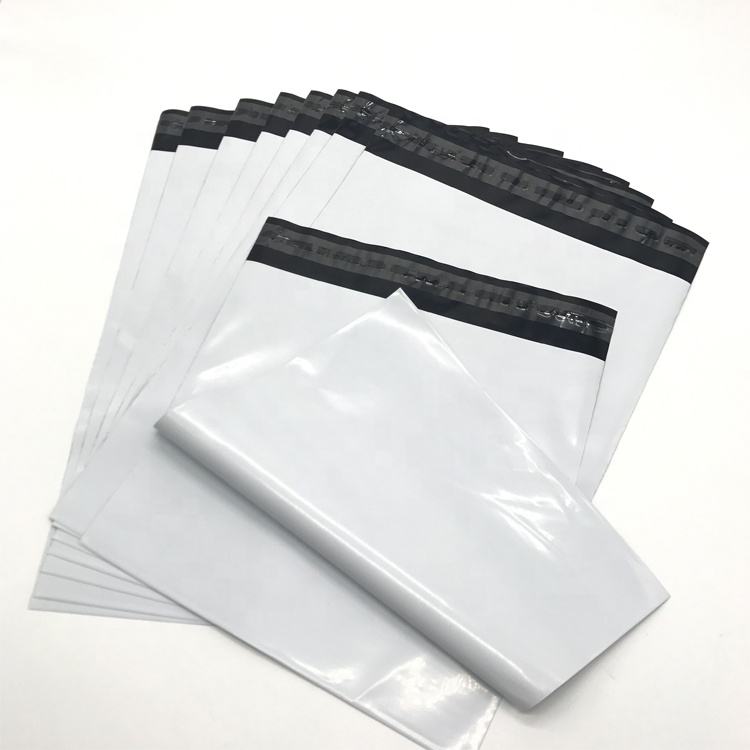
A poly mailer is the right choice for products that bend without breaking or already ship in their own box or rigid shell; a bubble mailer earns its place only when the product can crack, dent, scratch or shatter from the drops and compression of the shipping network. Most brands never make that call: the bubble mailer becomes the default when fulfillment is set up and stays the default long after the product mix has changed.
The problem is that bubble protection isn't free. You pay for it three times: in the unit cost of the mailer, in the cubic space it takes in storage and on the line, and — the one that compounds — in the dimensional weight the carrier bills on every parcel. For a lot of soft-good SKUs, that's protection the product never needed in the first place.
Here's how to tell which mailer a given SKU actually requires, instead of defaulting to the one that feels safest.
What each one is actually for
A poly mailer is a flat, lightweight, tear- and puncture-resistant film envelope. Its job is to contain the product, keep out moisture and abrasion in transit, and present a clean branded exterior. It protects against the things that happen to a parcel on a conveyor and in a truck: scuffing, snagging, light moisture, surface dirt.
A bubble mailer is a poly or kraft envelope lined with an air-bubble cushion. Its job is the poly mailer's job plus impact absorption — protecting a product that can crack, dent, scratch, or shatter from the drops and compression of the shipping network.
The distinction isn't soft goods vs. hard goods. It's whether the product can be damaged by impact and abrasion that its own packaging doesn't already absorb.
The protection question most brands get backwards
Bubble cushioning protects against impact and surface abrasion. It does very little against crushing — a stack of heavy parcels on top of a bubble mailer compresses the air cells and transmits the load straight through. So the instinct that bubble is “more protective, full stop” is wrong: it's more protective against one specific failure mode, and no help against others.
The other half of the mistake is ignoring the protection the product already carries. A phone case in its own retail box, a candle in a printed carton, a supplement bottle that's sealed and rigid — these arrive in a protective shell before they ever touch a mailer. Wrapping that shell in bubble is paying twice for the same protection. A poly mailer around the retail box is usually all the outer layer needs to be.
The cost you don't see: dimensional weight
Carriers bill on whichever is greater — actual weight or dimensional weight (length × width × height ÷ a divisor). A bubble mailer adds loft: the same t-shirt that ships at roughly an inch of profile in a poly mailer ships at two-plus inches in a bubble mailer, because the cushioning itself has height.
That extra height is what tips a parcel into the next dim-weight tier — and once it does, you pay the higher tier on every shipment of that SKU, for as long as the spec stays the same. On a few hundred thousand units a year, the difference between a flat poly mailer and a lofted bubble one isn't the cents of unit cost. It's a recurring freight line item that nobody on the team is assigned to watch.
The four questions that decide it
- Is the product rigid or fragile on its own? Glass, ceramics, electronics, anything with a screen or a hard edge that can crack — that's a bubble or a boxed shipment. Apparel, textiles, soft accessories, anything that bends without breaking — poly.
- Does it already ship in its own box or rigid shell? If yes, the outer layer mostly needs to contain and brand it — poly. If the product is bare, the mailer is the only protection it gets — lean bubble if it's at all impact-sensitive.
- Would a scratch or scuff turn it into a return? Painted hardware, jewelry, anything with a finish that shows wear — abrasion is the failure mode, and a poly mailer in the right film, or a light bubble liner, both solve it. A bare metal part nobody inspects closely — poly is fine.
- Is it going through an autobagger? Bubble mailers don't run on most automatic baggers; they're a hand-pack format. If the line is automated, the question answers itself: poly, in a film with the width tolerance the bagger needs.
When the answer is “a bit of both”
Plenty of products live in the middle: a little impact-sensitive, but not enough to justify the dim-weight penalty of a full bubble mailer on every unit. There are two clean answers.
The first is a poly mailer plus a targeted insert — a small piece of bubble or a molded-pulp corner only where the product is vulnerable — which keeps the parcel flat everywhere else. The second is a poly bubble mailer: a lightweight bubble format that splits the difference, giving you cushioning at a lower loft and weight than a traditional padded mailer. (It's a format we're bringing into production alongside our flat poly line — talk to us if you want to sample it against your current spec.)
The point isn't that bubble is wrong. It's that “bubble by default” is a decision nobody actually made — and on a real SKU mix, it's almost always over-protecting some products and mis-sizing others.
Spec it, don't default to it
Pull your top five SKUs by volume. For each one, run the four questions. You'll usually find the mix splits — a few genuinely need cushioning, and the rest have been riding in bubble out of habit, paying the loft penalty on every parcel.
Move the ones that don't need it to a right-sized poly mailer, keep the ones that do in bubble, and you've cut freight on the majority of your volume without taking on a single damage claim. That's the whole exercise: match the mailer to the failure mode, not to the feeling.
Frequently asked questions
- When should I use a poly mailer instead of a bubble mailer?
- Use a poly mailer when the product bends without breaking, such as apparel, textiles and soft accessories, or when it already ships in its own retail box or rigid shell. A bubble mailer is for products that can crack, dent, scratch or shatter from impact, such as glass, ceramics, electronics or anything with a screen or a hard edge.
- Do bubble mailers cost more to ship than poly mailers?
- Usually yes, because bubble cushioning adds loft and carriers bill on whichever is greater, actual weight or dimensional weight. A t-shirt that ships at roughly an inch of profile in a poly mailer ships at two-plus inches in a bubble mailer, which can tip the parcel into the next dim-weight tier on every shipment of that SKU.
- Can bubble mailers run on an automatic bagger?
- Bubble mailers do not run on most automatic baggers; they are a hand-pack format. If the fulfillment line is automated, the choice is a poly mailer in a film with the width tolerance the bagger needs.