


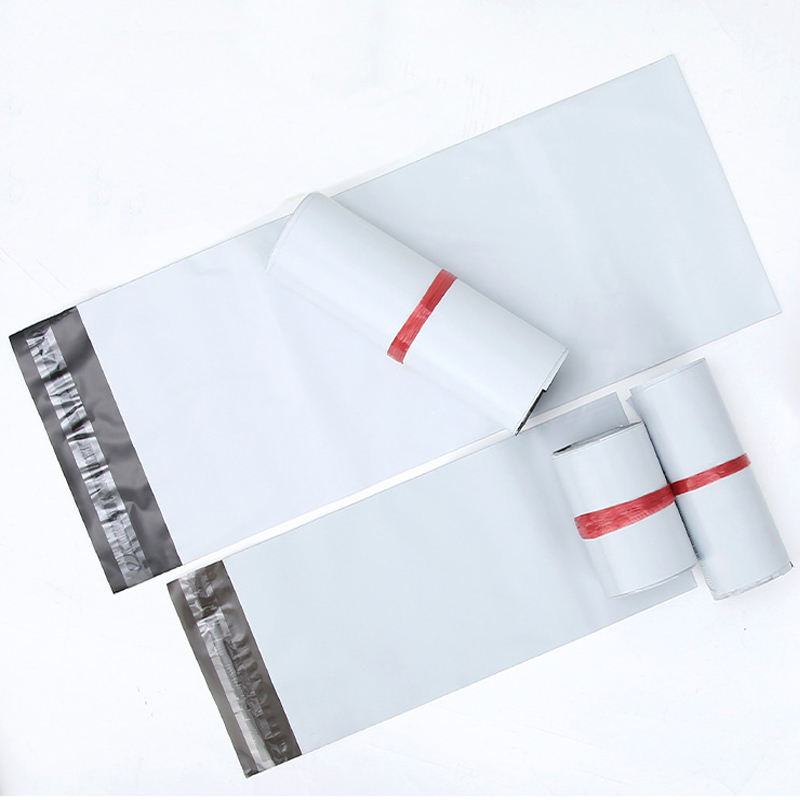
A defensible recycled-content claim states three things: post-consumer rather than regrind, the percentage by polymer weight, and which layers of the film carry it; ours is up to 57% post-consumer recycled by polymer weight in all three layers, declared by us as the manufacturer with a certificate of analysis on request. Most "made with recycled materials" claims leave those qualifiers out, which is how a token outer skin over virgin film, a flattering denominator, or an oxo additive that puts the word "degradable" on a bag gets sold as recycled content.
So here is our claim, with the qualifiers doing the work: our highest-PCR mailer construction runs up to 57% post-consumer recycled resin, by polymer weight, with recycled content in all three layers of the co-extruded film.
Why each qualifier matters
- Post-consumer — resin recovered from material that reached an end user, not factory offcuts reground and fed back in. Regrind is good practice; it is not PCR, and blending the two definitions is the oldest trick in the claim.
- By polymer weight — the percentage is measured against the resin in the bag, not against some component of it chosen to make the number bigger.
- All three layers — a co-extruded mailer has an outer face, a core, and an inner face. Putting recycled resin only in the core (or only the skin) and quoting the layer's own percentage is how a 20% bag gets marketed as a 50% bag. Ours carries recycled resin in each layer.
What we deliberately leave out
No oxo-degradable or oxo-biodegradable additives, in any construction. Oxo additives fragment film into smaller pieces rather than returning it to anything; several jurisdictions have banned them outright, and film carrying them contaminates the recycling stream this whole exercise is supposed to feed. A bag can be recyclable or it can be "degradable" in the oxo sense — pretending to both is marketing.
The honest limits
Two things we say plainly because a buyer's audit will find them anyway. The 57% figure is our declaration as the manufacturer, supported by a certificate of analysis on request — it is not a third-party certification, and we don't dress it as one.
And recycled resin is a real engineering input, not pixie dust: it arrives with more variability than virgin resin, which is exactly why it matters that the plant blending it also extrudes, prints and converts the film. When one roof owns the whole chain, a formulation problem surfaces on our line, not on your bagger.
What it costs
On our standard mailer, the recycled construction carries no premium. That isn't a subsidy — it's what the blend economics actually produce at our volumes, and it removes the last excuse for shipping virgin film with a leaf printed on it.
If your brand publishes packaging claims, ask every supplier the three questions above: post-consumer or regrind, percent of what, in which layers. The suppliers with good answers won't mind. That's rather the test.
Frequently asked questions
- How much recycled content is in Synergy's poly mailers?
- Synergy's highest-PCR mailer construction runs up to 57% post-consumer recycled resin, by polymer weight, with recycled content in all three layers of the co-extruded film. The 57% figure is the manufacturer's own declaration, supported by a certificate of analysis on request; it is not a third-party certification.
- Do recycled-content poly mailers cost more than virgin film?
- On Synergy's standard mailer, the recycled construction carries no premium. That is what the blend economics produce at the plant's volumes, not a subsidy.
- What should I ask a supplier about a PCR packaging claim?
- Ask three questions: post-consumer or regrind, percent of what, and in which layers of the film. Regrind from factory offcuts is good practice but it is not PCR, the percentage should be measured against the resin in the bag by polymer weight, and recycled resin only in the core or only the skin is how a 20% bag gets marketed as a 50% bag.