



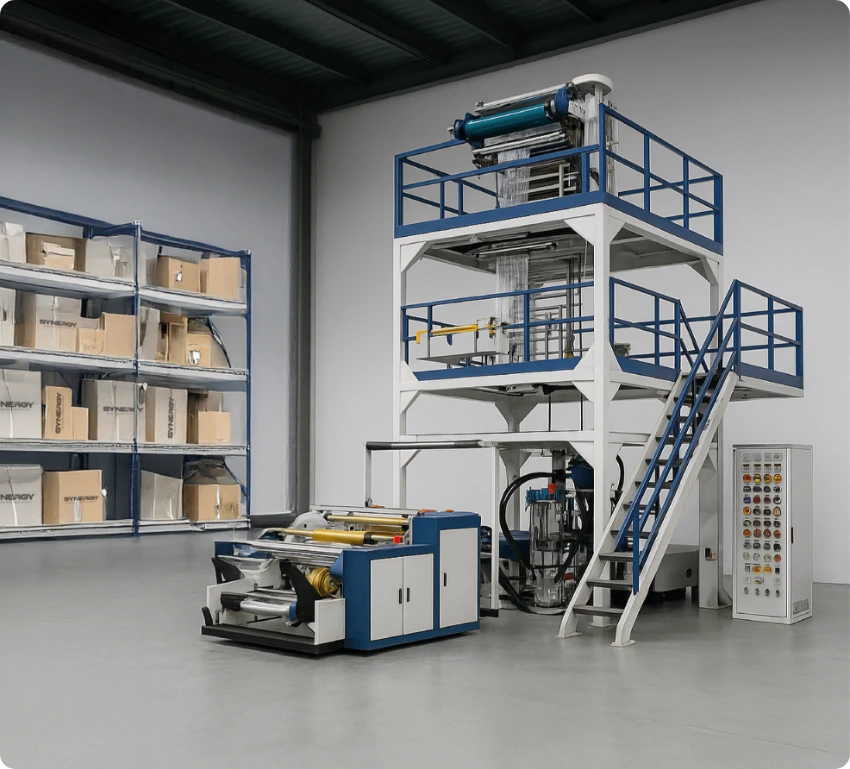
A poly mailer costs mostly what its film weighs: width × length × gauge sets the grams of resin in every bag, and resin markets set the floor under that weight. Closure, print, pack-out and conversion time add small but non-zero amounts on top, and volume moves the number by amortizing setup across more bags and buying resin at better breaks.
Film weight is the engine
A mailer is film, and film is sold by weight. Width × length × gauge determines the grams of resin in every bag, before anything else happens to it.
Two real numbers from our own costing engine: a 10 × 13 mailer at 2.5 mil carries about 11.9 grams of film. A 14.5 × 19 at the same gauge carries about 24.7 grams. The bigger bag isn't "a size up" — it's twice the material, and the price follows the material.
This is also why right-sizing is free margin. A mailer one size too big costs you twice: film you didn't need, and dimensional weight on the carrier invoice. We've written before about the one-inch-too-big problem; the physics here is the reason it matters.
Resin sets the floor
The film is a blend — LDPE, LLDPE, HDPE, masterbatch for colour, and post-consumer recycled resin where the construction calls for it. Those materials trade on commodity markets, which is why a serious quote carries a validity window: the floor under the price genuinely moves, and a supplier holding a price indefinitely is either padding it or planning to renegotiate at the worst moment.
The rest of the bag
Everything that isn't film is small per bag, and none of it is zero:
- Closure — the adhesive strip and its release liner, priced by the meter.
- Print — press time and ink by coverage. Plates are one-time tooling, reusable on every repeat run, which is why the second run of the same artwork is cheaper than the first.
- Pack-out — carton, case liner, pallet, stretch wrap. Unglamorous, and real: we've caught quoting errors in our own system where a carton priced at zero silently understated a six-figure quote.
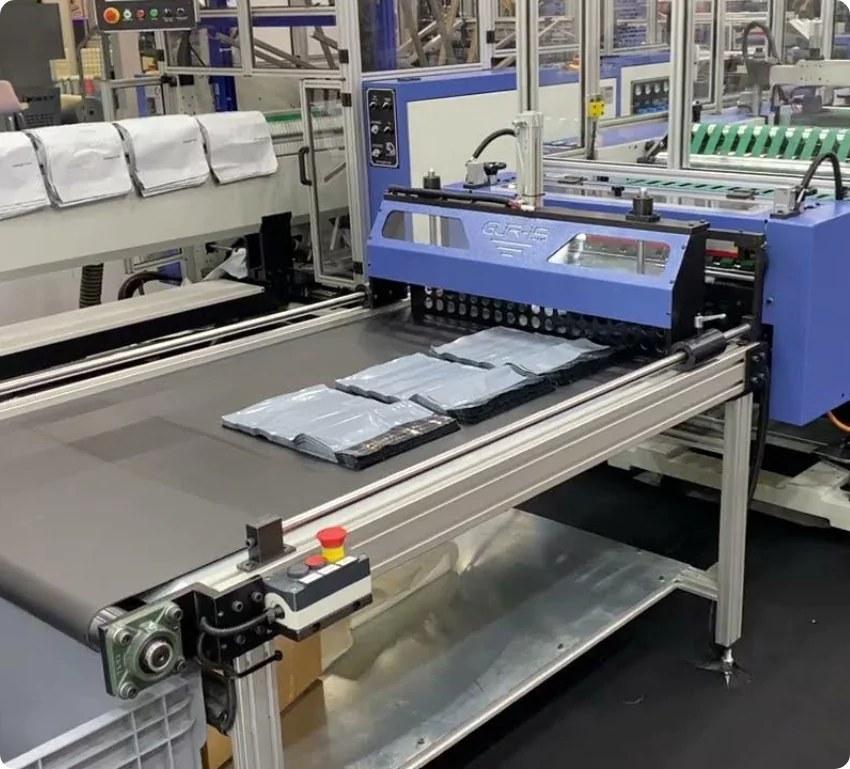
- Conversion — machine time, in bags per hour, plus setup amortized across the run.
Why volume moves the number
Higher quantities amortize setup across more bags and buy resin at better breaks. That's the whole mechanism — mechanics, not generosity — and it works in reverse too: it's why very small custom-print runs carry minimums. Ours is 50,000 pieces per artwork; unprinted stock has no minimum at all.
The test for any supplier
Ask them to show the math. A manufacturer that computes film weight, blend cost, closure, pack-out and machine time for your exact spec can tell you which line moved when the price moves. A supplier who can't itemize those lines is estimating — and you're the one carrying the estimate.
We quote from a costing engine that runs exactly this model. It's the same arithmetic this article just walked through, which is rather the point.
Frequently asked questions
- How is the price of a poly mailer calculated?
- Width × length × gauge determines the grams of resin in every bag, and film is sold by weight, so film weight is the engine of a poly mailer's price. Resin markets set the floor under that weight; the adhesive closure, print, pack-out and conversion machine time are added on top, and higher volumes amortize setup across more bags and buy resin at better breaks.
- How much does a poly mailer weigh?
- A 10 × 13 poly mailer at 2.5 mil carries about 11.9 grams of film, and a 14.5 × 19 at the same gauge carries about 24.7 grams, according to Synergy's own costing engine. The bigger bag is twice the material, not a size up, and the price follows the material.
- Why do custom printed poly mailers have a minimum order quantity?
- Small custom-print runs carry minimums because setup and plates are amortized across the run; Synergy's minimum is 50,000 pieces per artwork, while unprinted stock has no minimum at all. Plates are one-time tooling reusable on every repeat run, which is why the second run of the same artwork is cheaper than the first.