



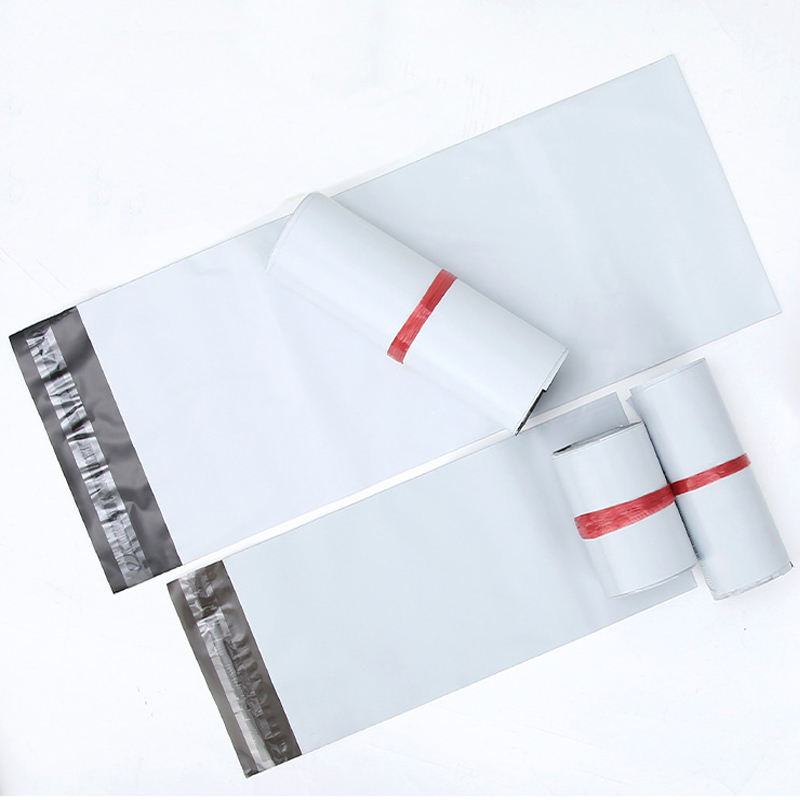
For most apparel and soft-good SKUs, the 9×12 mailer picked on launch day is an inch larger than it needs to be in both directions, and because carriers bill on whichever is greater, actual weight or dimensional weight, that inch can push every parcel into the next rate tier. The size usually gets chosen because it was what the supplier had in stock when the launch went live; the mailer works, SKUs ship, and the team moves on to the next problem.
Twelve months later, that 9×12 is shipping a few hundred thousand units a year, and nobody's gone back to look at it.
Here's the thing about a 9×12: for most apparel and soft-good SKUs, it's an inch larger than it needs to be in both directions. And when UPS, FedEx, or USPS calculates the dimensional weight on the package — length × width × height divided by 139 for domestic ground — that extra inch is the difference between a parcel that ships under the dim-weight threshold and one that doesn't.
The carrier doesn't bill on the actual weight of the t-shirt. They bill on whichever is greater: actual weight or dimensional weight. Once your mailer crosses that threshold, the rate jumps to the next tier — and you keep paying that tier on every shipment for as long as your spec stays the same.
What the math actually looks like
Take a folded t-shirt at roughly 7 oz actual weight. Inside a 9×12 mailer, with a couple inches of slack, the package profile reads as roughly 9×12×1 — and gets billed at the dim-weight equivalent of about 1 lb. Drop the same shirt into an 8×10 and the package profile gets close enough to the actual weight that the carrier doesn't trigger the upgrade.
The difference per shipment is small — sometimes 30 cents, sometimes a dollar. At a hundred thousand shipments a year, you've left $30,000–$100,000 on the carrier's table.
The reason this gets missed: nobody on the team is incentivized to look at it. Ops is sourcing the next thing. Procurement is hitting their cost-per-unit target on the mailer itself. Finance is reading the carrier invoice as a black box. The packaging line item did its job — it got the product to the customer. The freight line item is where the money actually leaks.
Why "just buy a smaller mailer" usually doesn't work
If your supplier carries stock sizes — 6×9, 9×12, 10×13, 14.5×19 — you can't always step down to the size you actually want. The next size below 9×12 is 6×9, which is too small for a folded t-shirt. So the team stays where they are.
The other option: spec the bag you actually need. An 8×10 doesn't exist in most supplier catalogs because most suppliers run on fixed stock dies. A supplier that runs its own extrusion and conversion lines can make 8×10 at any reasonable volume.
That's also the supplier you can call to ask: "Is the gauge right for our bagger?" A thinner film moves through automatic baggers differently than a thicker one, and the wrong gauge at the wrong line speed produces jams that cost more than the freight savings.
What a freight-aware packaging supplier should tell you
If you bring a 9×12 to a vertically integrated supplier and ask them to right-size it, they should come back with all of the following — not just a price on a smaller bag.
- The exact dimension that gets you under the dim-weight threshold for the carrier and zones you ship most.
- The gauge that holds up to drop testing at the new size. Most of the time, you can drop a gauge with a smaller bag because there's less surface area to fail.
- The film-stiffness profile your bagger needs at the new dimension. A 2.5 mil mailer that worked for sweatshirts isn't always the right hand-feel around a tank top.
- A run quantity that makes the changeover economical — if the savings don't pay back the new tooling and the inventory cutover within a quarter, they should say so.
If the supplier's first answer is "we have a 6×9 and a 9×12, which do you want?" — they're not in the freight-savings conversation. They're in the catalog-fulfillment conversation. Those are different jobs.
The audit nobody runs
Once a year, pull the carrier invoice. Filter to your top three mailer SKUs by volume. Note the dim-weight category each one bills into. Then take the actual products that ship in each one, hand them to your packaging supplier, and ask: "What's the smallest bag that holds this, still passes drop test, and runs clean on our bagger?"
If the answer is "the one you're using" — you're optimized. If the answer is "smaller than the one you're using" — you've found a six-figure line item.
The audit takes two hours. The fix takes a print plate and a production run.
Frequently asked questions
- How does dimensional weight affect poly mailer shipping cost?
- Carriers bill on whichever is greater, actual weight or dimensional weight, which for domestic ground is length × width × height divided by 139. A folded t-shirt at roughly 7 oz in a 9×12 mailer reads as about 9×12×1 and gets billed at the dim-weight equivalent of about 1 lb, while the same shirt in an 8×10 stays close enough to its actual weight that the upgrade is not triggered.
- How much can right-sizing a poly mailer save on shipping?
- The difference per shipment is small, sometimes 30 cents, sometimes a dollar, but at a hundred thousand shipments a year that is $30,000 to $100,000 left on the carrier's table. The audit takes about two hours, and the fix is a print plate and a production run.
- Why can't I just buy a smaller stock poly mailer?
- Stock catalogs typically jump from 9×12 down to 6×9, which is too small for a folded t-shirt, and the in-between 8×10 does not exist in most catalogs because most suppliers run on fixed stock dies. A supplier that runs its own extrusion and conversion lines can make an 8×10 at any reasonable volume and can also confirm the gauge is right for your bagger.